Monday, October 12, 2015

Necrophoresis...My Favorite Word

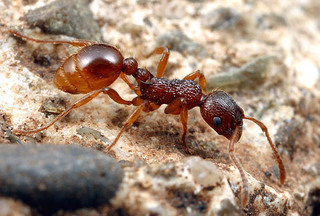
Eusocial insects such as ants often have many unique behaviors that seem fantastical based upon their small size.  One such behavior that many ants exhibit is the removal of dead members of the colony from the nest site.  This process, coined necrophoresis, has many advantages for the colony.  Research conducted by Diez, Le Borgne, Lejeune, & Detrain (2013) showed that in red ant, Myrmica rubra, special workers that live outside the main host of the colony are tasked with the removal of dead ants from the colony.  This process has direct benefits from preventing any diseased or parasitized ants from infecting the main host of the colony.  How do ants know when to remove a dead colony member?  Research completed by Choe, Millar, & Rust (2009) indicate that fatty acid compounds associated with the insect cuticle (waxy covering of the exoskeleton) disappear during death and are key indicators for worker ants to remove them from the colony.


                                             Copyright Discoverlife.org


Works Cited:

  • Dong-Hwan Choe
  • Jocelyn G. Millar

  • and Michael K. Rust 
  • Chemical signals associated with life inhibit necrophoresis in Argentine ants PNAS 2009 106 (20) 8251-8255published ahead of print May 4, 2009doi:10.1073/pnas.0901270106


  • Diez, L., Le Borgne, H., Lejeune, P., & Detrain, C. (2013, December 1). Who brings out the dead? Necrophoresis in the red ant, Myrmica rubra. Retrieved October 12, 2015.

    Wednesday, September 16, 2015

    Play Video Games....For Science!

    Science has, in its past, been largely a private affair between other scientists with little to any input from non scientists.  The dawn of the digital age has largely changed this as data is more widely available and researchers investigate large scale scientific issues and require large quantities of data.  One way scientists in various fields are gaining access to larger pools of data is employing the assistance of "citizen scientists".  Video games are one way researchers have encouraged and used citizens to assist in further scientific knowledge.  For example the games, "Forgotten Island" &  "Happy Match" present gamers with actual images of insects and other organisms and require them to classify them to unlock more puzzles.  This data has enabled researchers associated with these projects to gain insights into classifying and identifying unknown species (Haley, 2012)

    Forgotten Island
    Image: Image courtesy of Syracuse University, Citizen Sort

    If you feel like being a citizen scientist you can try your hand at Forgotten Island here

    Works Cited: 

    Haley, K. (2012, September 21). Shall we play a game?: Merging citizen science and video games. Retrieved September 16, 2015.

    Tuesday, September 1, 2015

    Haplodiploidy of Eusocial Insects

    Varying the amount of DNA transmitted to offspring is a unique strategy many insects that live in colonies such honeybees and ants employ.  What exactly is haplodiploidy?  Put simply, female insects are given a full diploid set of chromosomes through fertilization while the male counterparts are the result of unfertilized eggs.  Why employ this strategy?  One major benefit is a reduction in the role of sex which is energetically costly for females as well as sisters being more closely related to one another (Breed, 2003).  The schematic below provides a nice overview of the process in honeybees.


    Works Cited: 

    Breed, M. (2003). HAPLODIPLOIDY. Retrieved September 1, 2015.


    Tuesday, August 18, 2015

    Zombies are real!

    Zombies are among us! Okay, not the undead like in the popular television show, "The Walking Dead", but there are unique instances of parasitic organisms causing zombie like symptoms in their hosts.  For example, a number of fungal spores can cause insects to behave in a bizarre fashion.  Carpenter Ants infected with Ophiocordyceps camponoti-rufipedis fungal spores are "mind controlled" into not only dropping new spores near the colony but when they die to climb to leaves in the forest canopy so that spores can rain down on the floor below infecting new victims (Prigg, 2014).  Watch the video below for a more detailed look at the process.


    Other infections from parasitic worms in snails cause them to pulsate in their eye stalks and climb vegetation to be consumed by birds for the worms to complete their life cycles. After birds defecate the cycle resumes with snails ingesting the eggs found in the bird droppings (Simon, 2014)  Yum!
    Works Cited: 

    Prigg, M. (2014, August 21). Watch out for the zombie ants! Scientists find insects infected by mind controlling fungus always go back to their nest so their killer can find fresh victims. Retrieved August 18, 2015.

    Simon, M. (2014, September 14). Absurd Creature of the Week: The Parasitic Worm That Turns Snails Into Disco Zombies. Retrieved August 18, 2015.

    Monday, April 20, 2015

    Illegal Pet Trade

    Through out the world rare and endangered animals are captured and sold to individuals who fancy themselves exotic pet owners.  Not only is this illegal in many countries it also exacerbates wild population numbers for endangered species.  For example, according to a story published by Daniel Hajek for NPR, a man was arrested in California for smuggling frozen sea cucumbers over the Mexico border.  The 100 pounds of sea of sea cucumbers, worth up to $10,000 were found in the spare tire compartment of his car (2014).

                                        Image of man attempting to smuggle song birds through an airport                                                   (Credit:Associated Press)

    As more species become endangered the ill effects of the illegal pet trade on wild numbers will increase.

    Works Cited:

    Hajek, D. (2014, April 5). Lucrative Illegal Animal Trade Thrives In Southern California. Retrieved April 20, 2015, from http://www.npr.org/2014/04/05/299385928/lucrative-illegal-animal-trade-thrives-in-southern-california

    Monday, March 16, 2015

    Conservation of the Uglies

    In conservation biology determining which species to protect can often be a difficult decision.  Iconic species such as the Monarch Butterfly often evoke stronger calls for conservation from the public than lesser known species.While any type of conservation is in theory a good thing, not focusing on the ecological roles different species play in a given habitat is a poor strategy.  For example, researchers have named a new species of snail (Charopa lafargei) in Malaysia after a quarrying company (Lafarge) in hopes it may delay or prevent the company from destroying the habitat in which the snail was found.  Furthermore, a survey by George Mason University found that survey respondents were more likely to want to save "patriotic" or cute  named organisms than those with other names (Shiffman, 2014).  While the public opinion of a given species should not have much of an impact on ecological decision it can, and often does, have profound impacts on influencing government agencies.  Not only can public approval help a species by making it more visible to the general public but it also can generate important monetary donations which lesser known species would not be able to get.  While conservation of species is an important topic I think that the general public would be well advised to support all species rather than to pick "favorites" as biodiversity is something we all should value.


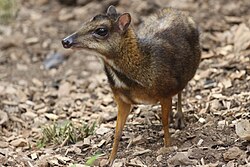
    Java mouse-deer at the Jerusalem Zoo (Wikipedia)

    Works Cited:

    Shiffman, D. (2014, December 16). Could an Animal's Name Save It from Extinction? Retrieved March 16, 2015, from http://www.scientificamerican.com/article/could-an-animal-s-name-save-it-from-extinction/

    Friday, March 6, 2015

    North American Native Bees

    The average U.S. citizen may be surprised to know that the common honey bee (A. mellifera) is not a native bee species to North America.  While the importance of the honey bee to agriculture is unquestionable, a number of native insect species also act as pollinators in North America.  Carpenter Bees for example, are native bees found in North America as well as a number of cuckoo bees.

    Native Bees pollinate crops native to North America including: tomatoes, blueberries, pumpkins, eggplants, and a number of other important crops.  While some native bees are social like the honey bee a number of other species live solitary lives or don't construct traditional combs.  Much like non-native honey bees a number of these important pollinators are also on the decline.  For more information on native bees read here.

    Native Sweat Bee (Agapostemon virescens)

    Works Cited: 

    Native Bees of North America. (2010.). Retrieved March 6, 2015, from http://bugguide.net/node/view/475348


    Monday, February 2, 2015

    Controlling Mosquitoes with Genetics

    Mosquitoes are well known vectors of a number of pathogens that can infect and cause sickness or death in humans.  Because of their role in disease transmission, the control of mosquitoes is an important focus for many countries.  Traditionally pesticides have been used to kill both the adults and larval forms of various mosquito species.  These techniques include fogging at night for adult mosquitoes and applying Bt toxin  or oil based larvicides on water surfaces to inhibit larva from breathing or to outright cause larval death.


     A couple of male, genetically modified Aedes aegypti mosquitoes take flight.


    Recently, health officials in Florida hope to implement a different strategy.  They plan to release genetically modified mosquitoes in the Florida Keys to combat dengue fever and other diseases transmitted by mosquitoes.  The push for approval from the FDA to release GMO mosquitoes is that health officials in Florida indicate that years of insecticide spraying have caused high levels of resistance in the target species of mosquito, A. Aegypti.  The move is not without controversy though as some groups oppose the use of GMO insects (Allen, 2015).

    Prior history would show that sterile males, albeit not genetically modified have been successful in controlling another Dipetran species in the United States, the screwworm fly.  In my opinion, field trials should be initiated as these GMO mosquitoes could save both human suffering and the costs for caring for infected individuals.

    Works Cited:

    Allen, G. (2015, January 28). Florida Health Officials Hope To Test GMO Mosquitoes This Spring. Retrieved February 2, 2015, from http://www.npr.org/blogs/health/2015/01/28/382168407/florida-health-officials-hope-to-test-gmo-mosquitoes-this-spring

    Thursday, January 22, 2015

    Learning Styles: An education myth debunked by science.

    Many teachers and students believe that they have a specific learning style.  For example, some students will claim that they are, "visual" or "kinesthetic" learners.  This long held belief that students learn in specific fashions is apparently a myth.  According a Nature Reviews Neuroscience, by Paul Howard-Jones, the interconnections of the brain and numerous educational and lab studies fail to support teaching to student learning styles (2014).  Furthermore, neuroscientist and writer, Christian Jarrett writes, 
    "surprisingly few studies of this format (learning preference) have produced supporting evidence for learning styles; far more evidence (such as this study) runs counter to the myth. What often happens is that both groups perform better when taught by one particular style. This makes sense because although each of us is unique, usually the most effective way for us to learn is based not on our individual preferences but on the nature of the material we’re being taught" (2015).

    Rohrer & Pashler (2012), explain that this myth continues to hold credence with many educators and students because it is founded a basic ideas which are true.  For example, while some students are poor visual learners this does not imply that an anatomy textbook should have less diagrams.

    Works Cited:

    Howard-Jones, P. (2014). Neuroscience and education: Myths and messages. Nature Reviews Neuroscience.

    Jarrett, C. (2015, January 5). All You Need to Know About the 'Learning Styles' Myth, in Two Minutes | WIRED. Retrieved January 22, 2015, from http://www.wired.com/2015/01/need-know-learning-styles-myth-two-minutes/

    Rohrer, D., & Pashler, H. (2012). Learning styles: Where’s the evidence? Medical Education, 634-635.


    Wednesday, January 14, 2015

    Gynandromorphs in Nature

    Male and female sexes are often quite obvious in many species of animals in the natural world.  Male birds, for example, can often have brightly colored feathers when compared to their female counterparts.  Sometimes, though errors can occur in cell division of the fertilized and an organism can develop exhibiting both male and female characters (Wall, 2011).  This error is fairly uncommon but a number of documented cases exist.  For example, a number of butterfly species have been found that are bilateral gynandromorphs, each sex gets half of the insect: wings, genitalia, body size, and other sex-related features.  Gynandromorphs can also form in insect species when a female has eggs which are fertilized by more than one sperm or from symbiotic bacterial infections (Parry, 2011). Bilateral gynandromorphs have also been documented in birds as well.


    Works Cited: 

    Adams, J. (2014, December 11). Georgia Lepidoptera. Retrieved January 14, 2015, from http://www.daltonstate.edu/galeps/

    Parry, W. (2011, May 31). Gender-Bender Bugs Impress Collectors. Retrieved January 14, 2015, from http://www.livescience.com/14207-gynandromorphs-butterfly-moths-arthropods-genetic-anomaly.html
    Wall, T. (2011, May 31). A Gender-bender Colored Cardinal : DNews. Retrieved January 14, 2015, from http://news.discovery.com/animals/bi-color-cardinal-mystery-110531.htm


    Tuesday, December 9, 2014

    Insect Camouflage & Coloration

    Cryptic coloration, body shape, and other adaptations are often common place in the insect world.  While most of us are familiar with walking sticks looking like tree or plant stems a variety of other insects have unique strategies for survival.  One group of insects that often can have rather grisly way of camouflaging themselves are assassin bugs.  The assassin bug, Acanthaspis petax, has the perhaps one of the coolest body armors in the natural world.  What is it?  A. petax uses the dead carcasses of ant prey to cover its body.  Research completed in 2007 found this corpse filled defense helps repel spiders from preying on them (Stromberg, 2012).


                                                              Photo by Mohd Rizal Ismail

    Another unique way of protecting yourself in the insect world is to resemble something big and tough, such as a snake. A number of caterpillars of moths and butterflies mimic the appearance of snakes to deter predators.  One such caterpillar is the spicebush swallowtail butterfly larva (Beiser Field Station, 2008).

    Beiser Field Station - Spicebush Swallowtail Caterpillar (Papilio troilus)
    Image credit: Beiser Field Station

    Works Cited:
    Spicebush Swallowtail. (2008, October 7). Retrieved December 9, 2014, from http://www.marietta.edu/~biol/biomes/spicebush.htm

    Stromberg, J. (2012, May 8). This Insect Uses Its Victims' Carcasses As Camouflage. Retrieved December 9, 2014, from http://www.smithsonianmag.com/science-nature/this-insect-uses-its-victims-carcasses-as-camouflage-83656246/?no-ist

    Friday, December 5, 2014

    Gut bacteria that can Degrade Plastic

    Indian mealmoths (Plodia interpunctella) have recently been discovered to harbor bacteria which can degrade polyethylene.  The bacteria in question, a Bacillus and Enterobacter species, were isolated from the guts of P. interpunctella and demonstrated significant degradation of polyethylene with "tensile strength dropped by 50%, and their ability to repel water droplets fell by 30%. And after the microbes grew on the polyethylene for 60 days, the mass of the plastic films decreased by 10%, and the molecular weights of the polymer chains dropped by 13%" (Pelley, 2014). 

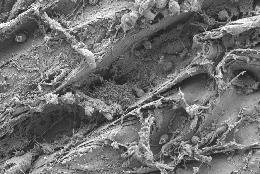
    Other studies complete 2011 found bacteria living in shallow pits on polyethylene  plastic found in ocean waste.  Researchers indicated that, " almost 25% of the baceteria on one polyethylene surface were vibrios, bacteria from the same group as the cholera bacterium" (Zaikab, 2011).

    Electron microscopy reveals the inhabitants of a plastic bag fished from the Sargasso Sea.T. Mincer/G. Proskurowski


    Works Cited:

    Pelley, J. (2014, December 4). Pantry Pests Harbor Plastic-Chomping Bacteria. Retrieved December 5, 2014, from http://www.scientificamerican.com/article/pantry-pests-harbor-plastic-chomping-bacteria/

    Zaikab, G. (2011, March 28). Marine microbes digest plastic. Retrieved December 5, 2014, from http://www.nature.com/news/2011/110328/full/news.2011.191.html

    Wednesday, November 26, 2014

    3 Facts about Turkeys

    Thanksgiving is right around the corner and in preparation for the holiday season I've decided to list a few facts I found interesting about turkeys (Meleagris gallopavo).

    1.  While most of us are familiar with the "gobble" sound made by turkeys, these birds also make a host of other calls.  According to the Cornell Lab of Ornithology Website, male turkeys "gobble" to attract mates, females and males "purr" while on foot, and courting males produce a "chump" sound which is not well understood (2014).  If you're curious about how these actually sound as well as other bird calls I highly recommend you visit the Cornell Lab page here.

    2.  Fun fact, Benjamin Franklin wanted turkeys to be our national symbol, not the bald eagle and lamented the choice. an Article in Slate Magazine, by Nicholas Lund (2014), cites a letter from Franklin stating, 

      "For in Truth the Turkey is in Comparison (sic. eagle) a much more respectable Bird, and withal a true original Native of America. He is besides, tho’ a little vain and silly, a Bird of Courage, and would not hesitate to attack a Grenadier of the British Guards who should presume to invade his Farm Yard with a red Coat on."

    3.  Every year the President of the United States pardons a turkey....... This year the lucky bird who won't be for dinner is from Ohio.  Read about it here.

    Image:  http://www.cashstore.com/blog/thanksgiving-costs-will-rise-in-2012/


    Works Cited: 

    Lund, N. (2014, November 25). Benjamin Franklin’s Bizarre Symbology. Did He Really Admire the Turkey? Retrieved November 26, 2014, from http://www.slate.com/articles/health_and_science/holidays/2013/11/benjamin_franklin_turkey_symbol_why_he_hated_the_bald_eagle_for_the_great.2.html

     Wild Turkey. (n.d.). Retrieved November 26, 2014, from http://www.allaboutbirds.org/guide/Wild_Turkey/sounds
    Thursday, November 20, 2014

    Nature Deficit Disorder

    Recently, a number of documentaries have been published alleging that teens and children today lack adequate exposure to nature.  The term, "Nature Deficit Disorder", first stated by Richard Louv in his book, "Last Child in The Woods" has become the phrase associated with the lack of outdoor play in children.  According to Louv, "Kids who do play outside are less likely to get sick, to be stressed or become aggressive, and are more adaptable to life’s unpredictable turns." (Egan, 2012).  What sort of evidence supports going outside more?  Studies completed by Atchley & Strayer (2012) on individuals going on hikes state: 

    "Our results demonstrate that there is a cognitive advantage to be realized if we spend time immersed in a natural setting. We anticipate that this advantage comes from an increase in exposure to natural stimuli that are both emotionally positive and low-arousing and a corresponding decrease in exposure to attention demanding technology, which regularly requires that we attend to sudden events, switch amongst tasks, maintain task goals, and inhibit irrelevant actions or cognitions"


      Despite an apparent correlation between nature and increased cognitive advantage the study failed to  conclude if exposure to nature or decreased use of technology resulted in a cognitive advantage.  Do you think kids aren't exposed to enough nature?  


    Below are two trailers for documentaries addressing "Nature Deficit Disorder". 


    Trailer 1:  "Mother Nature's Child"


    Trailer 2:  "Play Again"


    Works Cited:

    Atchley, R., & Strayer, D. (2012, December 12). Creativity in the Wild: Improving Creative Reasoning through Immersion in Natural Settings. Retrieved November 20, 2014, from http://www.plosone.org/article/info:doi/10.1371/journal.pone.0051474

    Egan, T. (2012, March 29). Nature-Deficit Disorder. Retrieved November 20, 2014, from http://opinionator.blogs.nytimes.com/2012/03/29/nature-deficit-disorder/?_r=0

    Wednesday, November 12, 2014

    New invasive species found in Pennsylvania

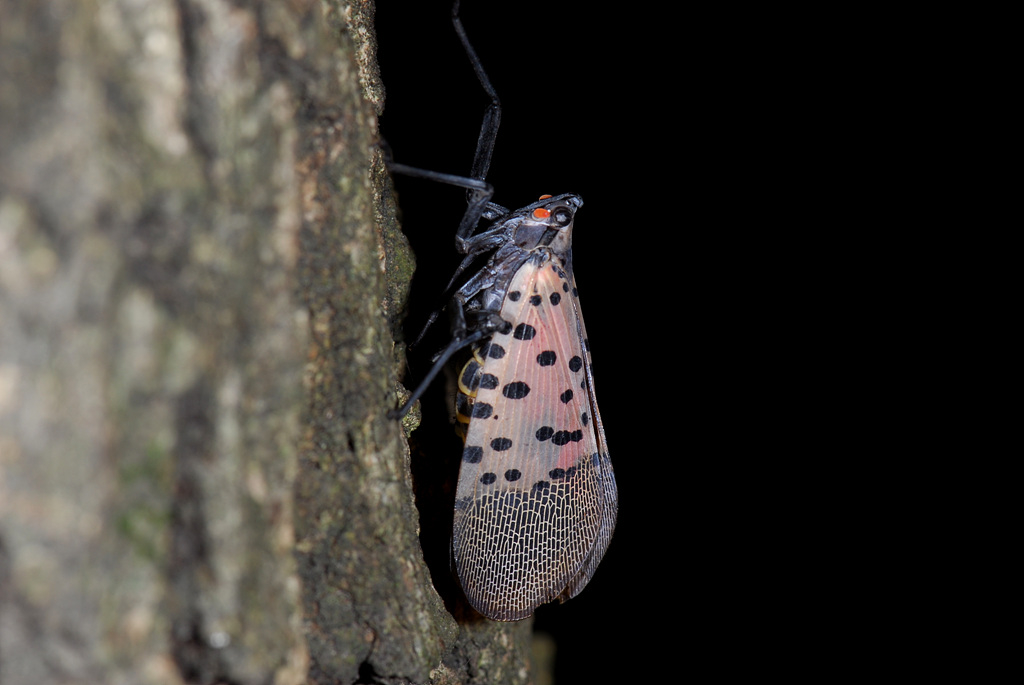
    Invasive species can be destructive forces in natural ecosystems and agricultural settings.  Recently, a number of counties in Pennsylvania have been put under quarantine as a non-native insect species was detected. The insect species in question, commonly known as the spotted lanternfly (Lycorma delicatula) , is native to China and southeast Asia.  The insect belongs to the Order Hemiptera, and is in fact, not an actual fly but a type of planthopper belonging to the family Fulgoridae. According to Dara (2014), "Spotted lanternfly feeds on a variety of host plants including fruit trees, ornamental trees, woody trees, and vines.  Apples, birch, cherry, dogwood, grapes, Korean Evodia, lilac, maple, poplar, stone fruits, and tree-of-heaven are among more than 70 species of hosts attacked by this pest."  This wide host range could become problematic for a number of agricultural crops if the spotted lanternfly were to become established in the United States. 


    For more information & tips for identifying L. delicatula visit: 

    http://ucanr.edu/blogs/blogcore/postdetail.cfm?postnum=15861

    http://www.farmingmagazine.com/blog-8053.aspx

    Works Cited:

    Dara, S. (2014, November 7). Spotted lanternfly (Lycorma delicatula) is a new invasive pest in the United States. Retrieved November 12, 2014.

    Monday, October 27, 2014

    Malaria & Mosquitoes

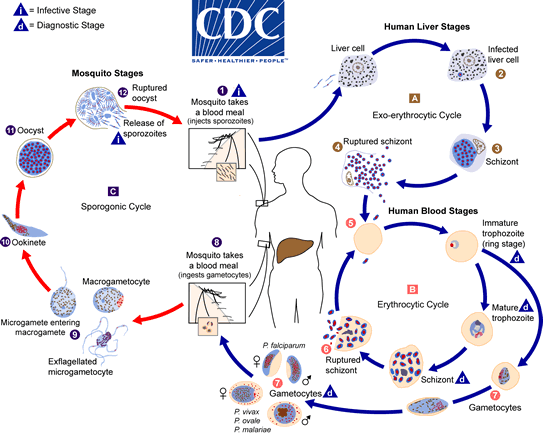
    Many insects are vectors of disease. Perhaps the most infamous of the insects associated with disease are flies in the family Culicidae or more commonly known as mosquitoes.  Mosquitoes vector a wide assortment of disease causing protozoans, viruses, and bacteria.  Malaria is perhaps the most deadly vectored disease from mosquitoes.  The chart below from the CDC (2012) provides a quick overview of how the Plasmodium completes its life cycle in humans and mosquitoes in the genus Anopheles.

    Mosquitoes are crucial for the pathogens transmittance to new host as the mosquito releases new "spores" to hosts when they take a blood meal.  The CDC website also provides a more detailed overview of the infection stages and can be found in the works cited page.  Malaria is a serious problem in my countries and deserves more public attention in the United States.

    Works Cited:  

    Malaria: Biology. (2012, November 9). Retrieved October 27, 2014, from http://www.cdc.gov/malaria/about/biology/


    Insects and Water Quality

    Insects are ubiquitous.  They inhabit nearly every habitat on the planet including freshwater lakes and streams.  Having clean freshwater is not only important for human consumption but for the general health of aquatic ecosystems.  Many insect species can be indicators of clean water as their larvae develop over extended time periods in freshwater.  Of these species, insects in the orders Plecoptera, Ephemeroptera, and Trichoptera are often associated with clean, fast moving waters.  By contrast, many Dipteran species such as midges and mosquitoes can thrive in sub-optimal conditions with little oxygen or significant organic nutrient waste.


    For more information regarding insects used in water quality testing visit: EPA: Macroinvertebrates.  

    Tuesday, October 21, 2014

    Insects as food

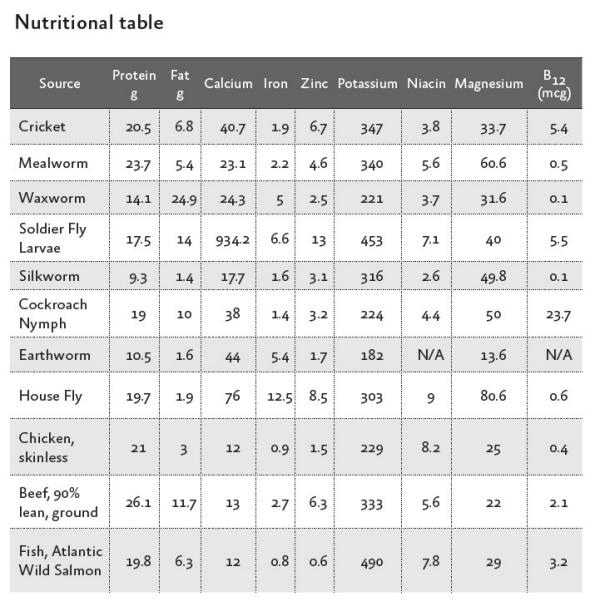
    While it may seem repulsive to some, the consumption of insects or entomophagy is a common practice in many countries around the world.  Insects when compared to other sources of meat require less natural resources and have pound for pound more protein than other more common meat sources (Holland, 2014).  Live Science author, Marc Lallanilla (2013), highlights 7 insects that we will more than likely be eating in the near future.  Of these insects listed here, meal worms are probably the most widespread and type of insects a budding entomophagist would consume.  I personally have no objections to consuming insects for food and have tried a number of different dried samples of meal worms, wax worms, and crickets. The wax worms were particularly tasty and reminded me of a cheese curl.  I provided a table showing the protein, fat, and other nutrients in various organisms from Slate.com.  You can check out the article here.

    So would you eat insects?  I know I would if I could readily purchase them at the store like a steak or hamburger patty.  Let the food revolution begin!

    Works Cited:
    Holland, J. (2013, May 14). U.N. Urges Eating Insects; 8 Popular Bugs to Try. Retrieved October 21, 2014.

    Lallanilla, M. (2013, October 1). 7 Insects You'll Be Eating in the Future. Retrieved October 21, 2014.

    Martin, D. (2014, April 28). Stop Adding Protein Powder to Your Post-Workout Shake. Add Bugs Instead. Retrieved October 21, 2014.


    Monday, October 13, 2014

    Insect Respiration

    Insects respire through opening in the sides of the abdomen or thorax known as spiracles.  Spiracles regulate the flow of oxygen and carbon dioxide gases within the insect tissues.  Unlike humans which use blood to transport gases both to and from the tissues, insects do not use their blood (hemolymph) for this purpose.  Instead oxygen gas passes directly into the tissues through a series of hollow tubes called tracheoles.
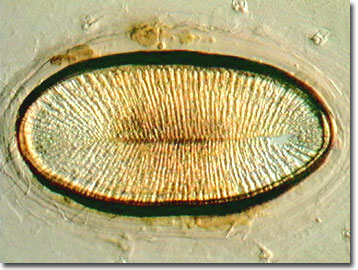
    Microscopy of Insect Spiracle (Kelly, Fellers, & Davidson, 2003)

    Insects that are aquatic have a number of other modifications for accessing oxygen from water.  In some cases external gills, such as those seen on a mayfly larva, are used to gather oxygen from running water.  Air bubbles, thoracic pumping, and breathing tubes are also employed by insects that live aquatic or semi-aquatic lives.  For more information about insect respiration visit this link: Insect Respiration

    Works Cited:

     Kelly, C.D.,  Fellers, T.J.,  & Davidson, M.W. (2003)Molecular Expressions: Science, Optics & You - Olympus MIC-D: Oblique Gallery - Insect Spiracles. (n.d.). Retrieved October 13, 2014.


    Tuesday, October 7, 2014

    Insect Development: Complete Metamorphosis

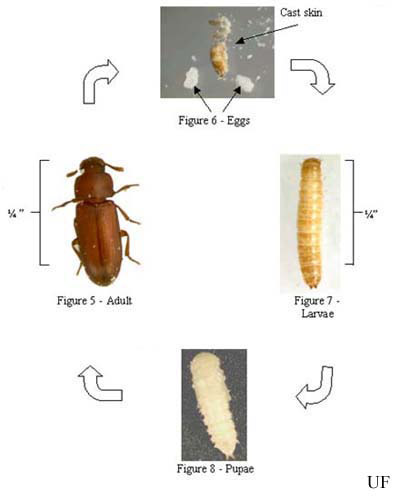
    Insects exhibit a diverse array of developmental strategies.  The development most commonly associated with insects is the life cycle of a butterflies in which an egg hatches into a caterpillar, the caterpillar creates a cocoon or chrysalis, and then the adult butterfly emerges.  This type of development exhibited by butterflies is termed holometabolous development.  Many insects exhibit holometabolous development such as beetles (Coleoptera), flies (Diptera), Dobsonflies (Megaloptera), and a number of other insect orders.  Insects that have complete or holometabolous development look vastly different when comparing larval forms and adults.  Also all holometabolous insects have a pupation period where physiological changes occur in the last instar that lead to adult characters.

    Confused Flour Beetle Life Cycle (Baldwin & Fasulo, 2014)

    Control of when to pupate or molt is largely controlled by the hormones ecdysone and juvenile hormone.  As the name implies, juvenile hormone promotes larval characteristics and inhibits molting or pupation.  By contrast ecdysone promotes molting, pupation, and the development of adult characteristics (Meyer, 2006).  For a more thorough introduction to molting and the hormones associated with it visit this link

    Works Cited: 

    Baldwin, R. & Fasulo, T.R. (2014) "Featured Creature: Confused Flour Beetle".  http://entnemdept.ufl.edu/creatures/urban/beetles/red_flour_beetle.htm

    Meyer, J.R. (2005).  "The Endocrine System: Hormonal Control of Molting & Metamorphosis" North Carolina State.  http://www.cals.ncsu.edu/course/ent425/tutorial/endocrine2.html